

A roof starts leaking from different places most often, it’s a small place. As a homeowner, fixing this yourself is very difficult. If you notice any faint brown stain on the ceiling after a storm. Soon, the water soaks the insulation, softens the drywall, and feeds mold. In this article, we will highlight the 10 most common causes of roof leaks, the signs of each one, how you can fix it as soon as possible, and why it is important.
1. Age-Worn Shingles
Age is one of the most important factors. If your roof is too old and you didn’t replace it, it turns soft shingles into stiff ones. Experts claim that the sun gradually extracts the oils from the asphalt. The shingle then cracks like dry mud. Loose granules leave bare asphalt in the sun.
Ultraviolet rays break down bare asphalt and the thin fiberglass mat fast, Carter writes. A hot summer day can push a shingle toward 160°F. If you live in States like Florida, Mississippi, Louisiana, Texas, and Arizona, you need to recheck your roof condition every week. On the other hand, a sudden storm can then cool it by up to 100 degrees in seconds. If you live in Florida, you better know when the storm comes, it destroys many things. That shift, called thermal shock, loosens granules and cracks the shingle over time.
You should watch for the signs below.
- Curled or cracked shingle edges
- Bare patches where black asphalt shows
- Loose granules in your gutters
Does your roof show any of those signs? You should have a licensed roofer inspect it before the next storm. Age is only part of the story. A 30-year-guarantee roof began to leak after just 14 years, according to one reader who wrote to Carter.
2. Rusted Flashing
The thin metal used to seal your roof’s joints is called flashing. Usually, it’s found around chimneys, walls, vents, and valleys. The metal can rust or lift. Rain then finds the gap. Rust and Corrosion. Temperature change is the most common reason
How often does flashing fail? According to experts, nearly 90 percent of roof leaks occur at flashings and penetrations. You can also read this in the article. The same article names improper flashing as the top contributor to as many as three-quarters of roof failures. It is important to know that the article dates to 2009.
Just imagine a brick chimney on a rainy night. Its galvanized flashing can rust through, most often at the 90-degree bend at the bottom. Step flashing along a wall fails the same way. Water can run right behind a piece that isn’t attached well.
You should look for the signs below.
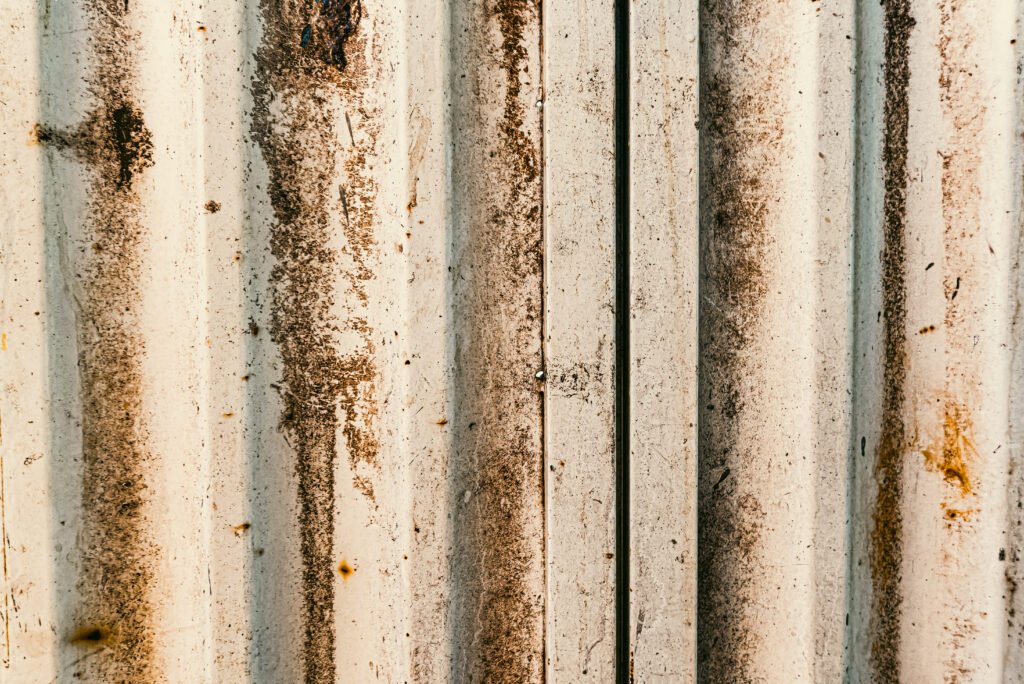
- Rust streaks near the chimney base
- Bent or lifted metal at wall joints
- There are water spots on the ceiling or wall next to the chimney.
3. Storm-Bruised Shingles With Bald Spots
Hail and high winds have stripped the protective mineral coating off storm-bruised shingles, revealing the black asphalt mat underneath. Bald areas on the shingles indicate this. Until they tear, curl, or blow off. Hail seldom punches a clean hole. It knocks the granules off instead.
Small hail counts too. Weathered shingles hit by small hail proved about ten times more prone to damage from later large hail.
- Reduced Lifespan: Having bald areas on your shingles, even if they’re just quarter-sized, can shorten their lifespan compared to having entire shingles.
- UV Damage: To protect your roof from solar damage, use mineral granules as a sunscreen. Their absence causes roofs to dry up and break rapidly when exposed to sunlight.
- Leak Risk Increased: Exposed, fragile asphalt increases the risk of leaks because it can crack, curl, or rip, letting water into your home.
4. Clogged Gutters
A blocked gutter is one of the most critical issues. When a gutter is clogged, water can’t get out. It sits at the edge of the roof and seeps under the tiles and fascia.
When it happens:
Increasing Water Level: When it rains, the water cannot drain instantly, so the water fills up the trough and spills over the back edge.
Drip Edge Missing: If the edge is missing or it was installed wrong, like not properly, behind the drain instead of over it, water can easily curl under the shingles.
Buildup: A wall sticks, pine needles, and shingle pieces block the flow of water in the gutter tub.
Wicking and leaks: The edge of the roof is wet from water that gets trapped and soaks through the underlayment and fascia boards made of wood.

5. Split Vent Boots
A vent boot is the collar that goes around a plumbing vent pipe and seals it off where it goes through the roof. Its only job is to keep water out. A cracked collar lets rain run down the pipe and into your house. Its typical life is near 15 years, possibly up to 30. The rubber collar can still rot or tear. You should inspect each boot often, as the magazine advises. Image a stain on your top-floor ceiling after a storm. From the yard, the roof looks good. It can finding the leak is the hard part. The repair is usually easy.
6. A Roof Valleys
A roof valley is the V-shaped seam or internal angle where two sloped roof planes meet and dump heavy rain because rain comes from both sides and snow into a single narrow channel that leads to the gutters. A 36-inch sheet of underlayment centered in each valley. Closed-cut shingles run at least 12 inches onto the far side. Open-valley metal should be at least 18 inches wide.
7. Skylight Frames
A skylight cuts a hole in your roof. That hole needs a perfect seal. A poor installation is one of the main causes of skylight leaks. There are three common mistakes. Some crews cut the opening to the wrong size. Others purchase the wrong skylight or miss the appropriate flashing. A new roof can spring a leak around an old skylight. A reroof job can jostle the unit in its frame. The flashing and seals can then break. When you plan a roof replacement, you should swap the skylight.
8. Chimney Masonry
Water does more harm to a masonry chimney than fire does. This is advice you can brick and mortar act like sponges. They pull moisture toward the inside of the chimney.
Freeze and thaw cycles make it worse. Cracks and gaps open in the brick, the mortar, and the crown. The most common crowns are mortar. Common mortar cannot withstand years of weather.
A better crown uses a Portland cement mix. Every side of the drip edge should be at least 2 inches longer than the next. A cap over the flue is the cheapest shield. You can not use paint and vapor-blocking sealers trap moisture inside.
9. Ice Dams
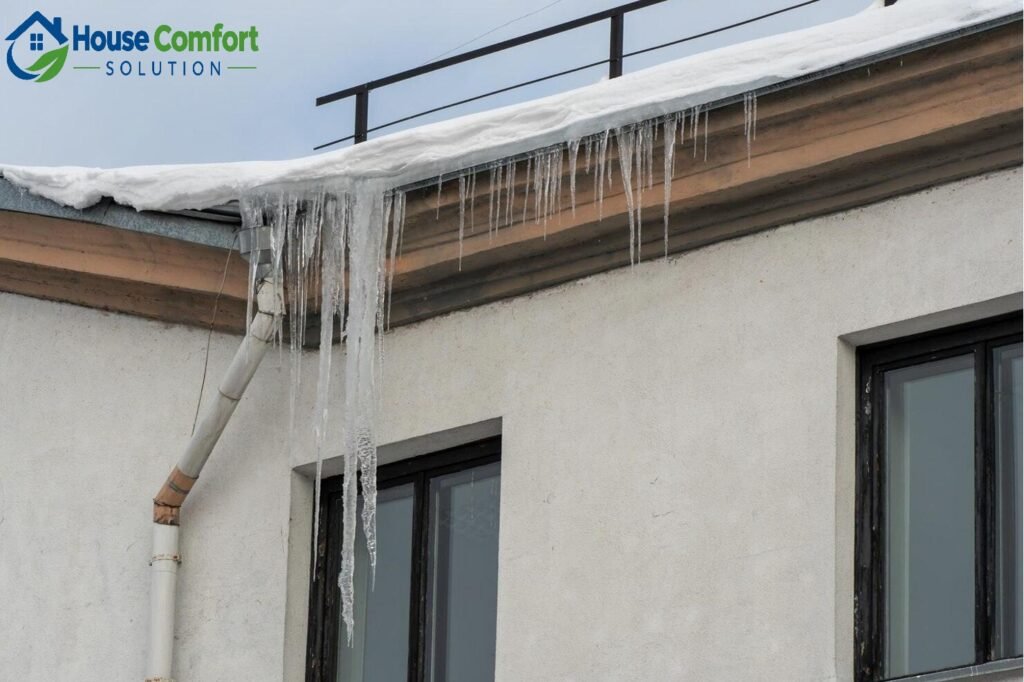
Along the edge of your roof, there is a ridge of ice called an ice dam. It stops snowmelt from draining off. The trapped water backs up and leaks into walls, ceilings and insulation.
Why does the ice form only at the edge? Heat from your house warms the upper roof. Snow melts there, then freezes again at the colder edge. Warm air that leaks through the ceiling carries most of that heat in many homes, the extension service reports.
The water finds cracks in the roof covering. It flows into the attic, then into the walls or through the ceiling insulation. Damp spots invite mold. You should dry water-damaged areas within 24 to 48 hours.
You should watch for the signs below.
- A thick row of icicles along the eaves
- A ridge of ice at the roof edge
- Stains on walls or ceilings near outside walls
10. Rushed Installs
Poor installation can start a leak on day one. A nail set too high misses the shingle below. A nail driven too deep cuts into the shingle surface. Manufacturers set clear rules. Roof makers like IKO call for 4 nails per three-tab shingle. It calls for 6 nails in high-wind areas or on steep slopes. The nails must sit above the cutouts and below the sealant strip.
Nails set too high cause bigger trouble. They warn that they can blow off several courses of shingles in strong wind. The wind flex can also weaken the seal between courses. IKO said that the proper installation is very important for full warranty coverage. Even one stray nail can leak. On a cold night, the nail frosts white. The frost melts by day and drips. You should clip the nail with side cutters, the magazine says.
Conclusion
Roof leaks start small. Time turns them into rot and mold. You should scan each slope from the ground this weekend, then check your attic with a flashlight. A licensed roofer can confirm what you find.
FAQ’s
What is the average cost to fix a roof leak?
The average cost of fixing the roof can usually range from $150 to $1,500, depending on the damage. The average homeowner pays out over $800 for a simple repair
Will homeowners insurance pay for a leaky roof?
Homeowners insurance will pay, but only when the roof leak is sudden, from a covered peril, and accidental, like hail, fire, a fallen tree, and windstorm.
Why does my roof only leak during heavy rain?
A roof that only leaks when it rains frequently probably has a volume-dependent leak, which means that the sheer amount of water fills up a small hole or weak spot that can handle light moisture.







[…] mark matches the code definition of positive drainage. You should also check the our article on 10 common causes of roof leaks shows what else to […]